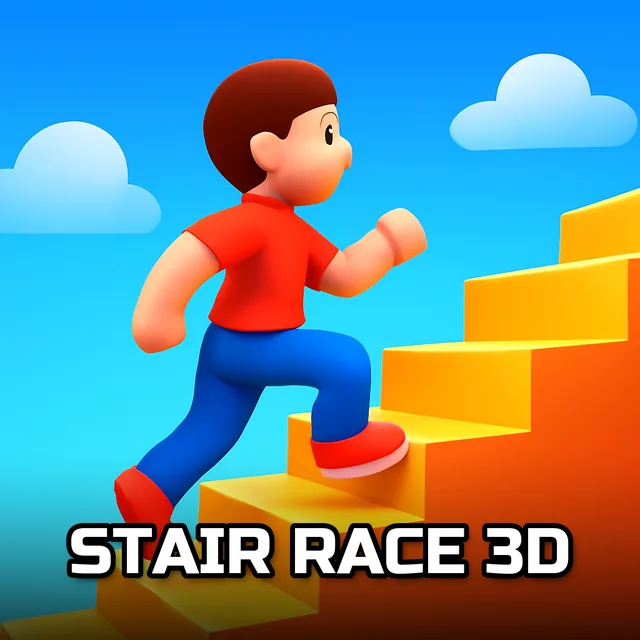
Stair Race 3D
Instructions:
allDescription
Stair Race 3D FAQ and Tips
Picture a mob of wobbly-legged runners all sprinting for the same pile of wooden planks, and you've got the general idea of Stair Race 3D. It's a chaotic little arena game where the goal isn't just speed, it's math on the fly: grab planks, slam them down to build stairs, and claw your way up to the next platform before someone barrels into you and scatters everything you've collected across the floor. Simple premise, messy execution, and that's exactly the charm. One second you're cruising in the lead, the next a rival with a fatter plank stack sends you tumbling and you're back to square one, hunting for scraps on the ground.
Winning Strategies
- Don't hoard planks near the middle of the pack; sprint toward looser, emptier zones where fewer enemies will bump you accidentally.
- Keep a rough count of who's carrying more planks than you and just avoid them entirely until your stack outweighs theirs.
- Building stairs early, even clumsy ones, beats standing around collecting "just one more" plank while rivals climb past you.
- Use tight corners and platform edges to funnel weaker opponents into your path so you can knock them over first.
- Watch for sudden speed bursts from other racers; that's usually the tell that they're about to make an aggressive charge at you.
- Losing a round isn't the end, so treat early matches as scouting runs to learn enemy patterns before going for a real win.
Controller & Keyboard Guide
- Movement is handled through simple directional input, letting you steer your runner across the arena floor without any fiddly combos.
- Interacting with planks and stair pieces uses the same intuitive input scheme, so picking up and placing feels almost automatic once you get a feel for timing.
- There's no complicated button-mashing here; the whole scheme leans on accessible, all-purpose controls anyone can pick up within seconds.
- Because the control setup is so forgiving, most of the actual skill comes down to positioning and split-second decisions rather than mechanical precision.